Hi
I was gifted an old ChromeBook, and tried several Linux Distro’s out.
Reverted to Chrome, waited a year and tried MrChromeBox again.
The sound does work, Audacity plays ogg files.
The audio output is upto 4 HDMI devices, which the ChromeBook doesn’t have, it has a pair of Bang and Olufsen speakers.
HWID. 4GB RAM, 32 GB eMMC storage.
HP ChromeBook 14db0003na Prod ID: 5AS60EA#ABUCAREENA C5B-A4I-C4P-43A-L6Y-A3A-A47).
2019/01/06 HP HP Chromebook 14 (db0000-db0999) careena grunt grunt x86_64 4.14 x86_64 Stoney Ridge Chromebook.
HOW2 force the config of Alsa (or similar) to change from the HDMI output to internal speakers?
nevj
27 February 2025 15:09
2
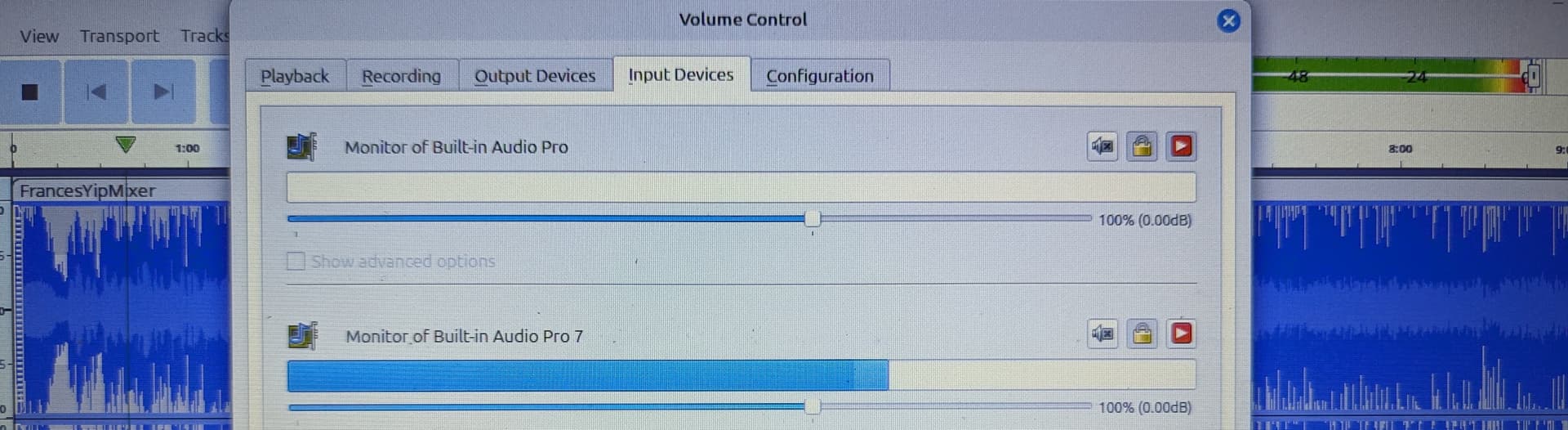
You use the pulseaudio volume control gui.
Hi
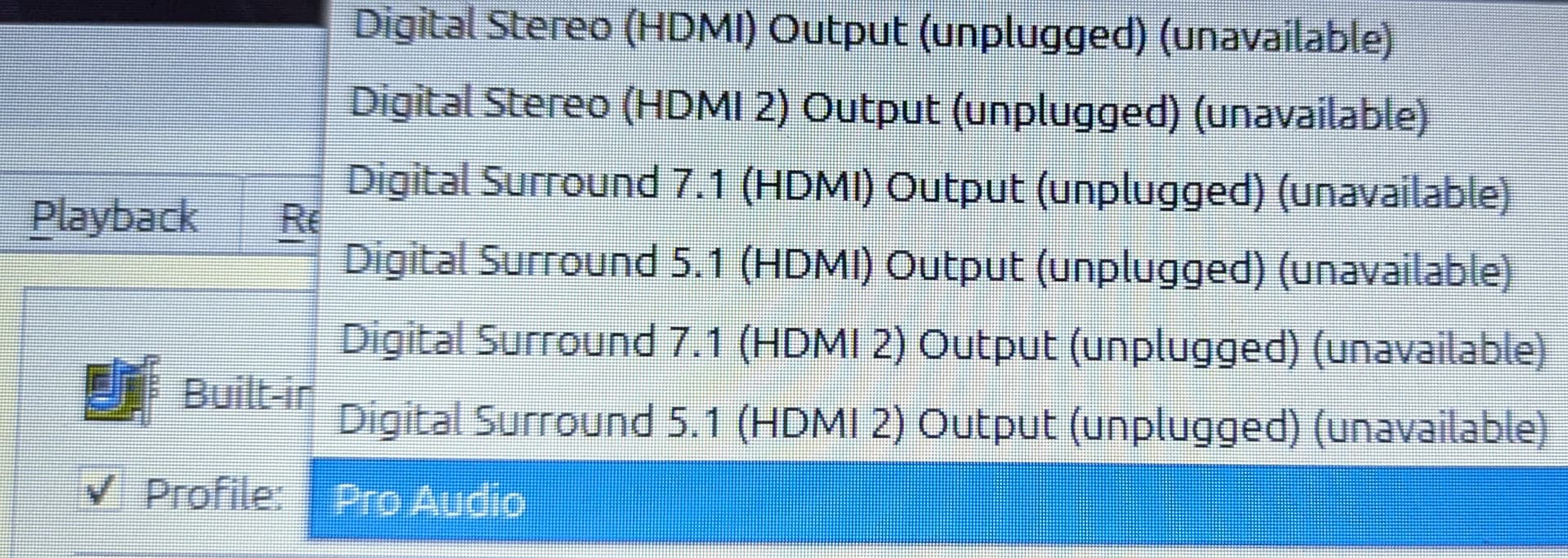
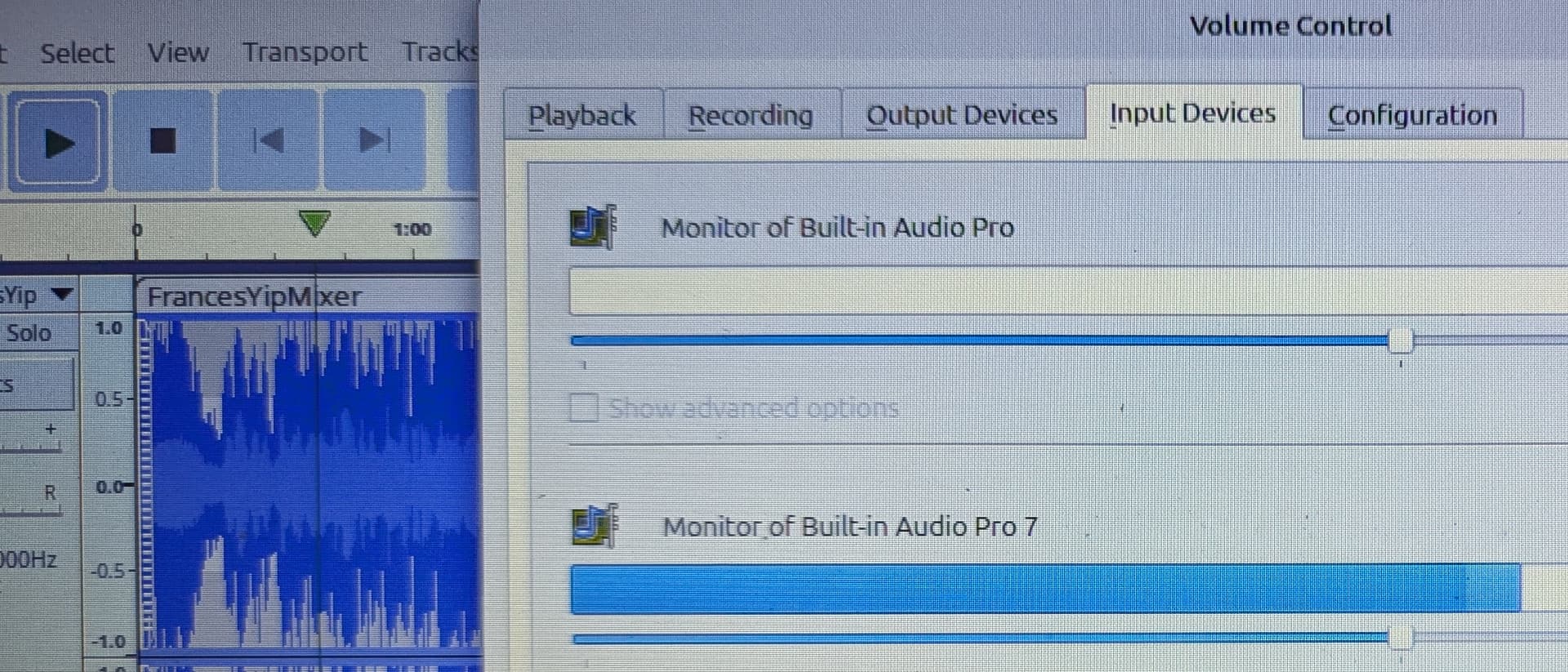
I hope that the above piccie explains things better than I can.
NOTHING I have tried has ever worked.
I am unable to ID or even trace any internal audio devices.
I had hoped that a later kernel would be better than a year ago, but sadly no.
Any other ideas?
nevj
27 February 2025 21:39
6
you have it on input devices
If your internal audio is not in pavu output devices, you need to look lower level …
does alsa show anything?
does the Mint detect any internal audio device when booting… look at dmesg… it is quite a long listing… scroll thru it carefully with dmesg | more
use lshw you might have to install it.
somehow you need to find the name of the driver for your internal audio, then check with lsmod to see if the kernel loaded the driver.
If you get that far and there is no driver loaded, let us know and we can show you how to force the kernel to load a driver.
Hi
Thank you so much.
I have scrolled thru dmesg and came up with a clue.
Putting the clue into an ai engine I got Carrizo 15b3 DUMMY as the built into the chip sound device, and it has an Intel driver.
So I am trying the amdgpu range of possible drivers, like amdgpu-dkms.
I know not the outcome as a module is being built, and it is inordinately slow.
But I believe it is progress thanks to you.
nevj
28 February 2025 22:17
8
Yes, modules need to be compiled.
you can load it dynamically while linux is running , with the modprobe command. That is temporary, it disappears on reboot. Do this first to test it
you can make it autoload at boot time by putting its name in /etc/modules. Do this when tested and you know it works.
Great work so far.
At least that means the card is recognised at boot time.
Hi
Thanks.
I will do a clean install of Mint and ask again so that I try things in a more ordered fashion.
Thanks for your patience.
archismanp
1 December 2025 23:17
10
Tech_JA
2 December 2025 17:55
11
Hi Archisman @archismanp ,
Jorge
archismanp
2 December 2025 23:08
12
@Tech_JA The script is not mine. It is maintained by WeirdTreeThing on GitHub. I found it when I was trying to install Ubuntu on my Chromebook and then I wrote about it (also, other chromebook questions ) on Ask Ubuntu.
Tech_JA
2 December 2025 23:59
13
Hi Archisman,
Jorge