I saw this item named The next generation of laptops will ship with CAMM2 memory, and it’s already in the works and it occurred to me that my friends here on It’s FOSS might be glad to read the item,
Ernie
I saw this item named The next generation of laptops will ship with CAMM2 memory, and it’s already in the works and it occurred to me that my friends here on It’s FOSS might be glad to read the item,
Ernie
Thanks Ernie… key point , it is not soldered, it is upgradeable.
Why only laptops?
Probably “space” and power consumption…
The more space you can save on a laptop MB - the more room for a bigger battery? Pretty sure that’s mentioned in the article…
Low Power (LPDDR) uses less power…
I really can’t see Apple adopting this - they’re perfectly happy to whack on a $500-$1500 premium to go from 8 GB to 16 GB RAM or 24 or 32 (soldered).
Note : I can see some mini-PC (e.g. MinisForums) makers adopting this. They already use laptop SODIMM modules… And the Intel Apple Mac Mini used laptop SODIM (the M series apple silicon Mac Mini are all soldered RAM and storage).
I took a look at a youtube video because I couldn’t figure out where the electrical contacts were from the online pictures of CAM2 modules… There’s three layers - and the whole setup looks like it uses about the same space as LpDDR3 or DD4 SODIMMs - I’m guessing the larger contact area makes them more efficient?
About the 2.5 minute mark :

Having torque settings and tighten order makes it a job not to be take lightly… And who has a “torque wrench” for small jobs like this just lying around? I don’t even have a jumbo sized one for motorcycle servicing!
As usual, the devil is in the detail.
Why dont they just solder in a vast excess amount of ram and be done with it.? …
I suppose money and sales competition come into it.
Today 4gb is not enough yet 10 years ago it was massive, so what is a massive excessive of ram ?
Would that lead to more bloatware in systems or apps. As the programmers no longer need tight code for it to run they can play to the size available
Thanks for sharing the vidéo showing the memory install and remove, if that is possible the new standard. I wonder, when you look at current memory modules 1gb against 2gb or 4gb etc ddr ddr3 ddr5 yes the size physical is the same and the number of pins but the cut out holes moves sometimes (not always). Some supplier remove the size labels so I cannot quickly tell what I have in stock or which speed it is. Boxes of older memory unusable in my workshop
Because : marketing…
It’s so false… e.g. (probably apocryphal) - MacBook Pro M1 with 16 GB RAM and 512 GB SSD - cost about $1500-2000 (AUD) more than the “default” model with 8 GB RAM and 256 GB SSD - but - I’m pretty confident - it didn’t cost Apple even $1000 more to build the same hardware with more RAM and storage!
And - when it comes to Apple - my personal MBP M1 - only has 8 GB RAM and 256 GB storage… and it’s still very usable today, some 6 years later…
And the latest MacBook model the “Neo” is using a SoC (System on Chip) based on the “A” series of Apple Silicon (arm64) designed for iPhones - and - the default model : 8 GB RAM… Not bad really - for $897 AUD - you can get the base model…
Now they’ve unified across O/S - i.e. Apple OS 26 is supposedly the same across iPad, iPhone and Mac - it’s probably easier… Having said that - I have OS 26 on my work MacBook, and OS 26 on my iPad Mini - they’re not that similar really…
I reckon 32 GB RAM would last a good 10 years or more… but even 16 GB is enough for Linux for the next 5 years at least…
I do prefer the idea of RAM slots and NVMe SSSD slots - to having those soldered onto the motherboard…
Having said all the above - I have 64 GB on my main desktop… That’s mostly 'cause I like to run up VMs and give them plenty of grunt… I’ve also got 16 “virtual” cores (i.e. 8 cores with hyperthreading). So I can run a couple of full desktop Linux distros (although I mainly spin up headless servers - to be honest) with 16 GB RAM and 4 CPU each - and run them at the same time as my desktop OS…
Did bill gates say something similar about memory and DOS before windows came.
I would guess about 4x what you normally get.
I would imagine most people (Foss users exempt) do not have a laptop more then a few years old. My wife’s laptop is 16 years old and runs on 4 GB of RAM.
Your memory is pretty good. But supposedly it is not true, but he is credited for saying it.
"Myth: Bill Gates said “640k ought to be enough for anybody”
Yes I know, but its pulled out every so often to remind us of silly comments.
Bit like Moore’s law is the observation that the number of transistors in an integrated circuit (IC) doubles about every two years, bet thats down to every 2 hours now…..
It’s possible maybe to run a graphical desktop with that RAM but nothing more..
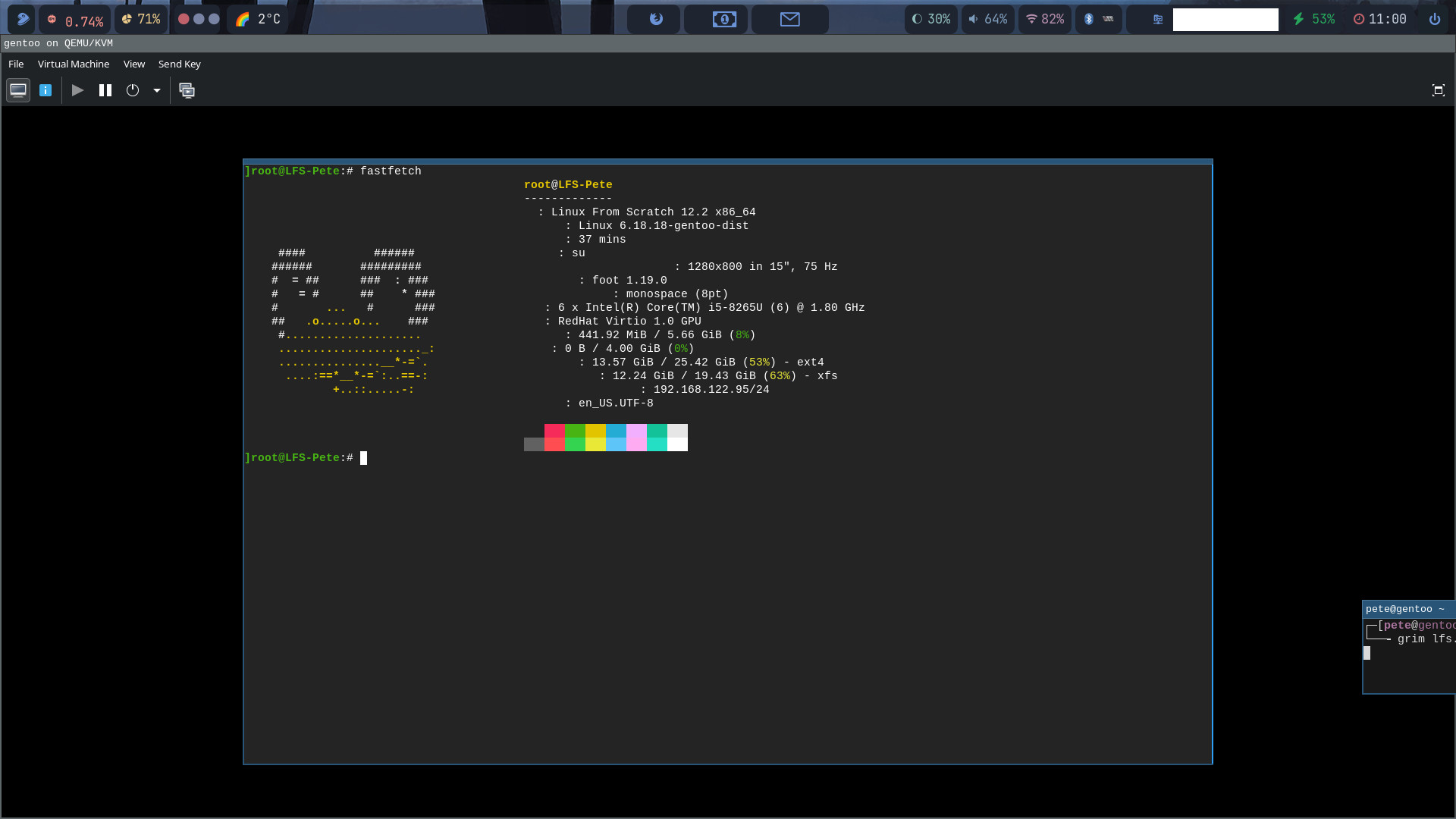
There’s sway and foot running in that picture
EDIT: I feel stupid! 640k is not 640M
Yes, big difference. Back in 1970-71 the mainframe IBM business computer we had only had 32K to run the applications on. The computer even had those tiny donuts “core” memory.
My reaction - exactly! We can only hope that motherboard and desktop PC providers figure out that this is a great way to improve RAM efficiency, and reduce power consumption, making their wares more attractive …
Ernie
My guess is that low-force torque wrenches or perhaps torque-adjustable small power drivers will become much more common if this technology grows in popularity. It’s too much early days for this technology for anyone to make anything like an educated guess yet, but I see it as having a lot of apparent potential!
Ernie
Agreed! And that applies to more than RAM! When I picked up my primary laptop, it came with a 512GB M.2 NVMe SSD drive, 16GB system RAM, and a discrete NVIDIA Graphics adapter with 4GB VRAM. That sounded like a great and future-proof set-up then, but soon after I got it, I added another 16GB system RAM, and now I’m rtying to save up for a 1TB M.2 NVMe SSD to upgrade my storage, because while the 512GB would be fine for data storage, I need more room on my system drive, and I can’t do that without an incredible hit to performance using an external drive. I know, I gave it a shot!
Ernie
That sounds familiar! But then again, no one had heard about Moors law yet, either …
Ernie
Don’t! You caught yourself, so at least there’s that! 
Ernie
This brings to mind the thought that not so far into the future, we’ll be measuring RAM in TB’s rather that GB’s …
Ernie